What Buyers Should Know About Glencoe Lakefront Ravine Homes
May 14, 2026
May 14, 2026
If you are drawn to Glencoe’s lakefront and ravine homes, you are probably not looking for an ordinary property. These homes offer striking views, privacy, and architectural presence, but they also come with site conditions that can shape everything from what you can build to how you maintain the property over time. If you want to buy with confidence, it helps to understand how terrain, zoning, and long-term stewardship all work together here. Let’s dive in.
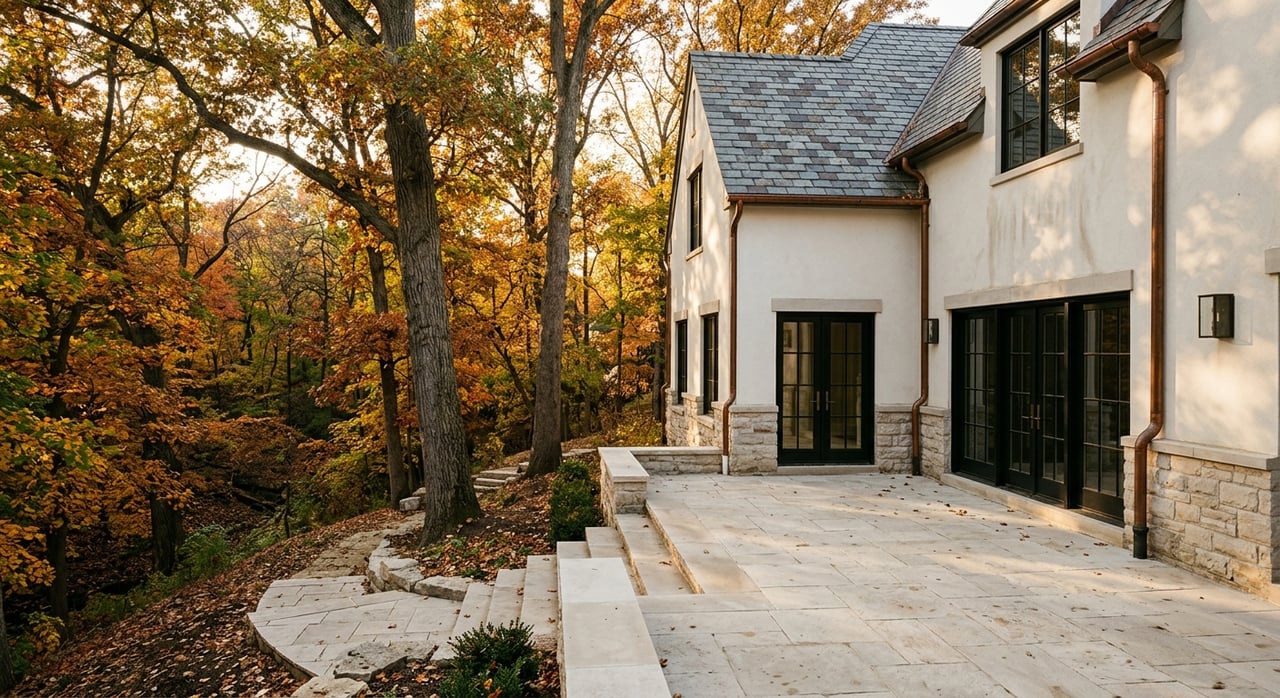
Glencoe’s lakefront sits along the Lake Michigan bluff coast, where wooded bluffs and deep ravines define the landscape. In this regional bluff belt, bluffs can reach about 90 feet in height, which helps explain why many homes feel elevated, secluded, and visually dramatic.
That same terrain can also narrow buildable space and make access more complex. On these lots, the land itself is often just as important as the house. Views, slope conditions, tree cover, and setback limitations can all influence value and future plans.
Glencoe’s planning materials place clear emphasis on preserving the village’s character, unique architecture, and quiet, tree-lined streets. For you as a buyer, that means a lakefront or ravine property is often best understood as a highly site-specific asset rather than a standard suburban home.
The Lake Michigan shoreline is dynamic. Illinois coastal research and U.S. Geological Survey findings note that fluctuating lake levels, storms, erosion, and shoreline structures all affect the coast, and high-water periods can increase bluff erosion and even submerge beachfront areas or structures.
The 2013 to 2020 high-water period brought a sharp increase in erosion and habitat loss along the coast. If you are considering a lakefront property in Glencoe, it is wise to think beyond the current view and ask how the site has performed over time.
Not every lakefront improvement follows the same review path. Illinois Department of Natural Resources guidance says work on a bluff or landward of the existing bluff toe may fall outside the waterway permit process, while direct shoreline work such as seawalls, revetments, beach nourishment, or pier-related improvements can require state and federal review.
In practical terms, that means future projects may involve multiple agencies depending on the scope and location of the work. If you are buying with renovation plans in mind, permitting should be part of your due diligence from the start.
Glencoe’s own site-development checklist shows how detailed the review process can be for construction on sensitive sites. Private residential work may require topographic surveys, engineering certifications, grading and utility plans, stormwater detention calculations, erosion-control measures, tree protection, and specialized drainage handling when runoff flows toward a ravine or bluff.
That level of review is a useful signal. On a premium lot, the carrying costs of improving or reworking the site can be meaningful, even before construction begins.
One of the biggest draws of a ravine lot is privacy. Elevation changes, wooded slopes, and mature trees can create a sense of separation that is hard to duplicate on flatter parcels.
At the same time, those same features can complicate additions, pools, retaining walls, drainage planning, and garage placement. The setting may feel natural and effortless, but ownership often requires thoughtful planning and site-sensitive decision-making.
Glencoe’s zoning code defines bluff, ravine, slope impact area, slope transition area, and steep slope zone. Within the steep slope zone, permitted work is sharply limited and mainly includes slope-stabilization structures, rebuilding on an exact existing foundation, limited cantilevering, and narrow stairs.
That matters if you are buying for future expansion. A beautiful lot can still have a constrained building envelope, especially where the rear yard or side yard meets a bluff or ravine edge.
A 2024 Sheridan Road case before Glencoe’s Zoning Board of Appeals noted that a rear-yard ravine and bluff limited buildable area, and the Village Engineer discouraged construction in the steep slope zone. That is an important real-world example for buyers who are evaluating a property’s long-term flexibility.
If your vision includes a pool, garage changes, a larger footprint, or major site reconfiguration, you will want to study the lot as carefully as the residence itself.
On Glencoe’s premium sites, lot size alone does not tell the full story. Setback rules, accessory-structure restrictions, and variation procedures all influence what can realistically be added or changed.
For example, accessory structures generally cannot be placed closer to the street line than the principal building front plus 10 feet. Variations can reduce yard or setback dimensions by up to 20 percent, but approval is not automatic.
Glencoe’s preservation rules are designed to protect exterior architectural character. Village planning materials also emphasize preserving historic buildings, neighborhoods, and architectural compatibility with surrounding homes.
That can be especially relevant if you are considering a home with landmark status, honorary recognition, or notable architectural significance. In these cases, style is not just aesthetic. It can directly affect renovation strategy, timeline, and resale positioning.
Many buyers are attracted to these homes because they feel tucked away and protected by mature landscaping and topography. In Glencoe, that sense of privacy often overlaps with preservation goals and site-protection requirements.
In other words, the features that make a property special may also be the features most carefully regulated. That is not a drawback, but it is something to understand before you buy.
Glencoe’s top-tier homes cover a wide architectural range. On one end, you will find Prairie-style and Wright-related design influence, including the historic Ravine Bluffs subdivision and homes shaped by sloping ravine sites. On the other, you will see later modernist residences and newer luxury construction on exceptional parcels.
This variety matters because architecture and land are closely linked here. A ravine lot may favor a design that engages the slope and wooded setting, while a bluff-top lakefront site may derive much of its value from orientation, view corridors, and how the structure sits on the land.
For you as a buyer, the choice is often not simply old versus new. It is a question of whether you value historic character, site integration, and architectural pedigree more than the potentially larger-scale footprint and flexibility that newer construction may offer.
As of April 2026, the 60022 market showed a median listing price of $2,599,500, a median sold price of $1,975,000, 27 active listings, and median days on market of 21. Market data also described the area as a seller’s market, while Zillow reported an average home value of $1,577,965, up 12.7 percent year over year.
At the top end, recent sales show how strongly site quality can influence pricing. A lakefront estate at 585 Longwood sold for $7.1 million with 137 feet of private beachfront, while a bluff-top modernist property at 21 Lakewood sold for $9.2 million without direct beach access, driven by its views, acreage, and design. An off-market purchase at 1 Glade Road for about $8.3 million also highlights the premium placed on assemblage potential and compound-scale opportunity.
The takeaway is simple: in Glencoe, the lot, the architecture, and the long-term usability of the site can matter as much as square footage. Sometimes more.
If you are seriously considering one of these properties, focus on the site as much as the residence. A thoughtful evaluation often includes:
In this segment of the North Shore market, a beautiful showing is only the beginning. The strongest purchases are usually made with a clear understanding of both immediate appeal and long-term stewardship.
For buyers and sellers in Glencoe’s most distinctive settings, experience matters. If you are evaluating a lakefront estate, a bluff-top residence, or a ravine property with redevelopment or legacy potential, Jena Radnay offers discreet, highly tailored guidance rooted in North Shore luxury expertise.
Stay up to date on the latest real estate trends.
Jena Radnay, and the focus of her real estate business, is all about people. Radnay’s love for real estate, houses, marketing, and people have allowed her business to grow organically, albeit explosively, in large part from referrals from her extensive network of contacts and connections.
Let's Connect