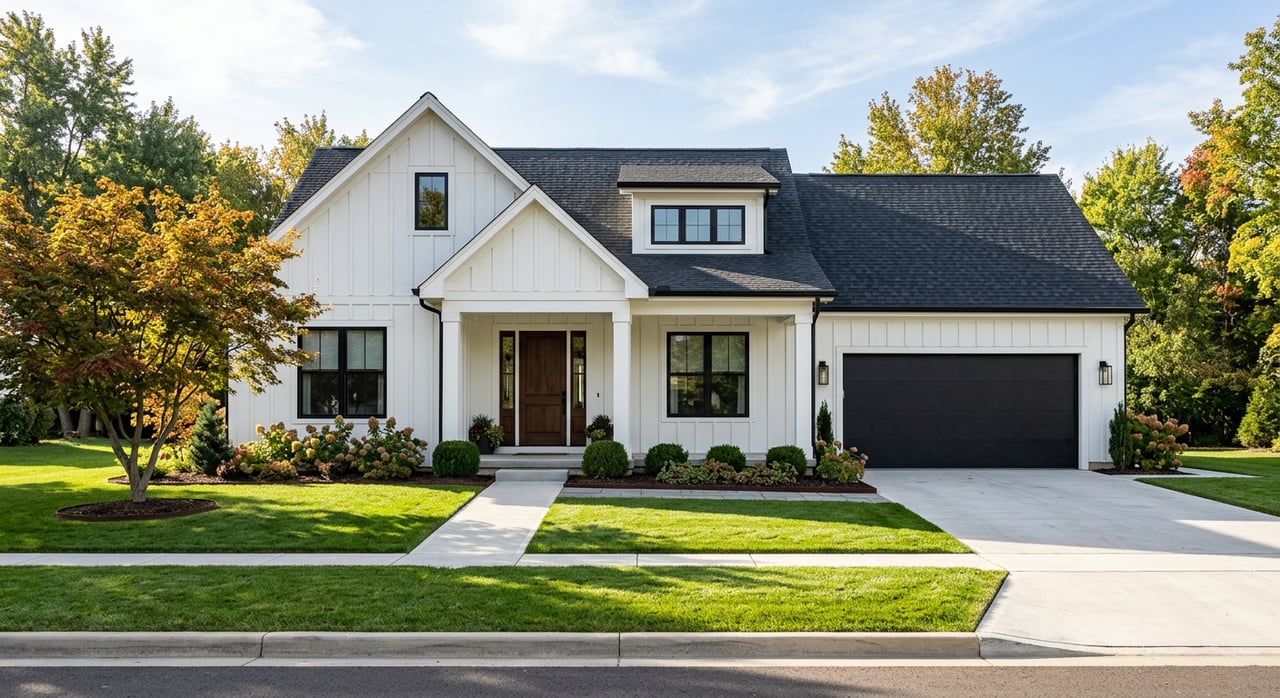
Wilmette Teardowns, Lots, And New Luxury Construction
March 24, 2026
March 24, 2026
Eyeing a lot by the Wilmette Golf Course and wondering if a teardown or custom build will pencil? You are not alone. In a market where typical Wilmette home values hover near $900,000, buyers and investors continue to evaluate lots and older homes for their rebuild potential. This guide gives you a clear path: how zoning sets the envelope, what permits and tree rules require, what to budget, and how to gauge resale for a luxury new build. Let’s dive in.
Wilmette remains one of the North Shore’s higher price bands, with a typical home value near $900,000, which supports demand for new, well-executed construction that fits the neighborhood context. Zillow’s local index for Wilmette helps illustrate the baseline. Lots that edge the Wilmette Golf Course can command premiums for views, privacy, and larger parcels. Your baseline feasibility should reflect that micro-location matters, block by block.
Your first step is to identify the parcel’s single-family sub-district and run the math. Wilmette’s 2014 code created R1-A through R1-I sub-districts with different minimum lot areas and widths. For example, R1-A requires a minimum lot area of 8,400 square feet and 60 feet of width; R1-B requires 6,000 square feet and 40 feet of width; R1-I requires 5,000 square feet and 40 feet of width. Maximum building height is the lesser of a dimensional limit or 2.5 stories, depending on sub-district. Review the official tables and definitions in the Village zoning ordinance before you sketch.
Wilmette limits both lot coverage and floor area using a modified formula tied to lot size. The ordinance also includes specific bonuses that can add allowed area, such as a garage floor-area bonus and potential porch or attic allowances. These can change what you can build by hundreds of square feet, so you should compute them early using the Village’s published methodology in the zoning ordinance.
If a design exceeds by-right rules for items like setbacks, height, lot coverage, or calculated grade, plan on a public process. Variances run through the Zoning Board of Appeals, with application handbooks, notices, and hearing calendars. Build this time into your schedule and pro forma. Start with the Zoning Board of Appeals handbook to understand steps and timelines.
Before you remove an older home, the Village requires specific submittals. A demolition permit application must include utility disconnects and new service permits, a topographic or site plan, and a Tree Survey and Tree Protection Plan prepared by a certified arborist where applicable. For many older structures, Cook County demolition and asbestos documentation is required. The Village also outlines neighbor notifications and site restoration requirements. Use the Demolition Handbook and Checklist to plan your sequence and avoid delays.
Tree preservation is enforced in Wilmette and can affect both your site plan and staging. Private trees 6 inches DBH or larger require a Tree Removal Permit, and new construction must include a Tree Protection Plan, with required fencing, replacement, or fee-in-lieu where applicable. Right-of-way or heritage trees can trigger added review and conditions. Get familiar with the Tree Regulations Manual and bring an arborist in early.
Grading and stormwater are core design inputs. New homes must address stormwater management, finished-floor elevation, and site grading. FEMA flood map checks and Village engineering submittals may influence your foundation, drainage, and even retaining solutions. The Single-Family Construction & Permit Handbook outlines required engineering and plan components.
Every lot is different, but you should model conservative ranges before you commit.
Wilmette targets about 10 business days for each reviewer to complete the first review for typical projects when submittals are complete. Complex designs, public hearings, and outside agency approvals will add time. Map your calendar against the Village’s target timeframes and match them to builder mobilization.
What drives value in this pocket of Wilmette is clear: lot size and frontage, a balanced floor plan and usable square footage, curb appeal that fits the block, parking, and quality of finishes. School district assignment is also a known consideration for many buyers. Verify a parcel’s attendance area directly with the districts; District 39 and New Trier Township HSD 203 have published policies, including areas of attendance. Always build to the scale and price-per-foot expectations of immediate comparables.
Use this buyer or investor checklist before you write an offer. Each item can be a contingency or a pre-application task.
If a specific lot along the Wilmette Golf Course has your attention, start with a pre-application call to the Village’s Community Development team, then order the survey, arborist report, and a Phase I environmental. Share early concepts with a proven North Shore architect and at least two custom builders, and calibrate your program to the block’s strongest comparables. When you want private, data-driven guidance on sourcing, valuation, and resale strategy, connect with Jena Radnay to Request a Private Consultation.
Stay up to date on the latest real estate trends.
Jena Radnay, and the focus of her real estate business, is all about people. Radnay’s love for real estate, houses, marketing, and people have allowed her business to grow organically, albeit explosively, in large part from referrals from her extensive network of contacts and connections.
Let's Connect